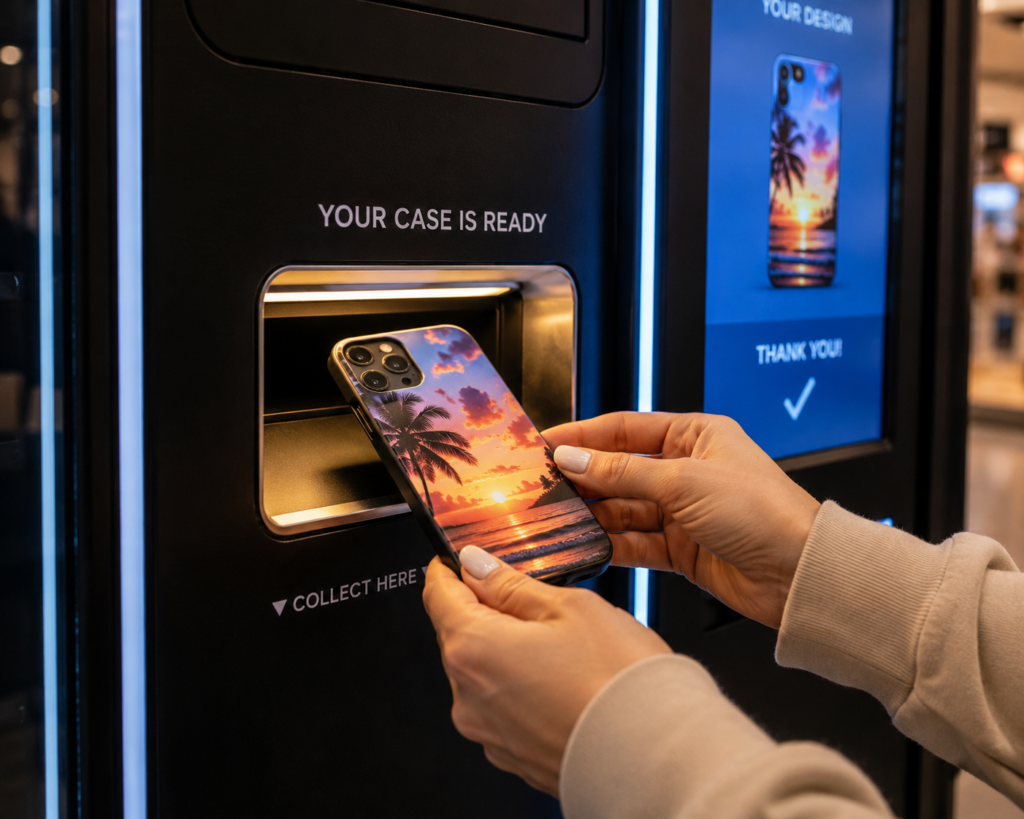
The vending machine business has always rewarded people who spot a gap before everyone else does. Snacks and drinks were the obvious starting point, then came electronics, cosmetics, and fresh food. The latest category making serious noise is phone accessories, and specifically the Honor phone case vending machine format that lets customers walk up, choose a design, and collect a finished custom case on the spot. What started as a novelty in a handful of malls has turned into a legitimate business model that entrepreneurs across multiple markets are now taking seriously.
The reasons are not hard to understand once you look at the numbers behind phone ownership, accessory spending, and the economics of unmanned retail.
The Market Is Already There
You do not have to create demand for phone cases. It already exists at enormous scale. Billions of smartphones are in active use globally, and the accessory market that surrounds them runs into hundreds of billions of dollars annually. Phone cases are one of the most purchased accessories in that market, bought repeatedly by the same customers as phones get upgraded, cases wear out, or people simply want something different.
What the vending machine format does is intercept that existing demand at the point where it is most urgent. A person standing in an airport with a cracked case or a brand new unprotected phone is not going to wait two days for an online delivery. They will buy something right now if the right option is in front of them. That is the commercial logic that makes this business model work.
Low Overhead, High Footfall
Traditional retail requires staff, rent on a sizeable floor space, stock management, and opening hours. A phone case vending machine requires none of those things in the same way. The machine takes up a fraction of the floor space a kiosk would need, runs without staff around the clock, and handles transactions automatically.
For location operators, the appeal is straightforward. A machine tucked into a corner of an airport terminal or placed near the entrance of a shopping mall generates revenue from space that would otherwise sit idle. For the machine owner, the cost of placement is typically a revenue share with the venue rather than a fixed lease, which keeps the risk manageable, especially when starting out.
The overhead structure of this business compares very favourably to almost any other form of physical retail you could enter.
Why Custom Printing Changes Everything
Early phone case vending machines stocked pre-made cases in a limited range of designs. They worked as a convenience play but not much more. The shift to on-demand custom printing is what has genuinely opened up the business opportunity.
A machine that can print any design onto a case at the point of sale is not competing with the generic accessories section of a phone shop. It is offering something that even well-stocked online retailers struggle to match: immediate personalisation. You choose a design, upload a photo, or pick from a catalogue of hundreds of options, and the machine produces a finished case while you wait.
That capability changes the customer conversation entirely. Instead of settling for whatever happens to be in stock, the customer gets exactly what they want. That experience commands a better price point and generates stronger word of mouth than any off-the-shelf product can.
The Locations That Work Best
Not every location is equal for this kind of machine. The ones that perform consistently well share a few characteristics:
- High footfall from people who are already thinking about their phones, such as airports, train stations, and transport hubs where travellers are in hand-luggage mode and acutely aware of their devices.
- Spaces where people have dwell time, including shopping malls, food courts, university campuses, and entertainment venues where there is time to browse and make a considered purchase.
Locations that combine both qualities, high footfall and dwell time, are the sweet spot. An airport gate lounge is a good example. People are sitting, they have their phones out, and they have time to go through the design process without feeling rushed.
The Honor Angle
Honor has grown its global user base considerably over the past few years, particularly in markets across Asia, Europe, and the Middle East. Honor owners tend to be engaged with their devices and willing to spend on accessories that reflect their style. The brand sits in a segment where customers expect quality and take the appearance of their phone seriously.
For vending machine operators, catering to Honor models is a smart move in markets where the brand has strong penetration. A machine that supports a wide range of Honor models alongside other major brands covers more of the customer base walking past it and reduces the number of people who have to walk away empty-handed because their model is not listed.
The more phone models a machine supports, the better its conversion rate. That is a simple truth of this business and one worth keeping in mind when evaluating which machine setup to invest in.
What the Investment Looks Like
The entry point for this business varies depending on the machine specification and the supplier, but it is considerably lower than opening a physical retail unit. A single machine, well-placed in a high-traffic location, can cover its cost relatively quickly if the location is right and the pricing is sensible.
Most operators start with one or two machines to understand the locations that perform best before scaling. The data a machine generates, how many transactions per day, which designs sell, which phone models are most common, is genuinely useful for making smarter decisions about where to place the next one.
Why Now Is a Good Time to Look at This
The market for on-demand custom phone accessories is still early enough that competition in most physical locations is limited. The technology has matured, the customer behaviour is established, and the business model is proven in enough markets to remove most of the guesswork. That combination does not stay available forever.
Entrepreneurs who have built successful vending machine businesses consistently say the same thing: the window where a location is uncrowded and the format is still novel is the best time to get in. For phone case vending machines, that window is open right now in most markets, but it will not stay open indefinitely.

